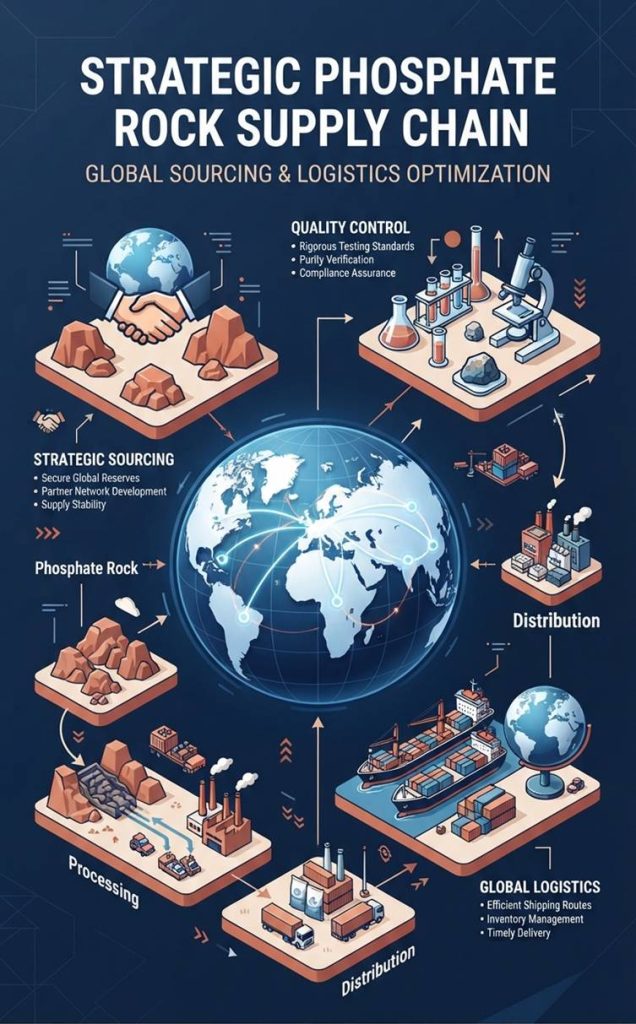
Phosphate rock stands as one of the most critical strategic mineral commodities in global trade. It plays a fundamental role in food production, industrial processing, and the long-term sustainability of global agriculture. As the primary raw material for phosphate fertilizers and phosphoric acid, phosphate rock underpins a vast spectrum of downstream industries across both developed and emerging economies. In today’s highly competitive landscape, the strategic sourcing of phosphate rock transcends the mere act of identifying a vendor and negotiating prices. It demands a structured, comprehensive approach-one that integrates market intelligence, rigorous supplier qualification, technical product assessment, contractual planning, bulk logistics management, quality assurance, and proactive risk mitigation. For importers, fertilizer manufacturers, processors, and industrial buyers, designing a robust procurement strategy for phosphate rock is essential to ensuring supply continuity, optimizing final costs, and enhancing long-term operational performance.
Why Does Phosphate Rock Hold Strategic Importance in Global Trade?
Phosphate is far more than a mineral; it is the “vital artery” of modern civilization. Its applications are expansive, extending from the food on our tables to the cutting-edge batteries powering the electric vehicle revolution.
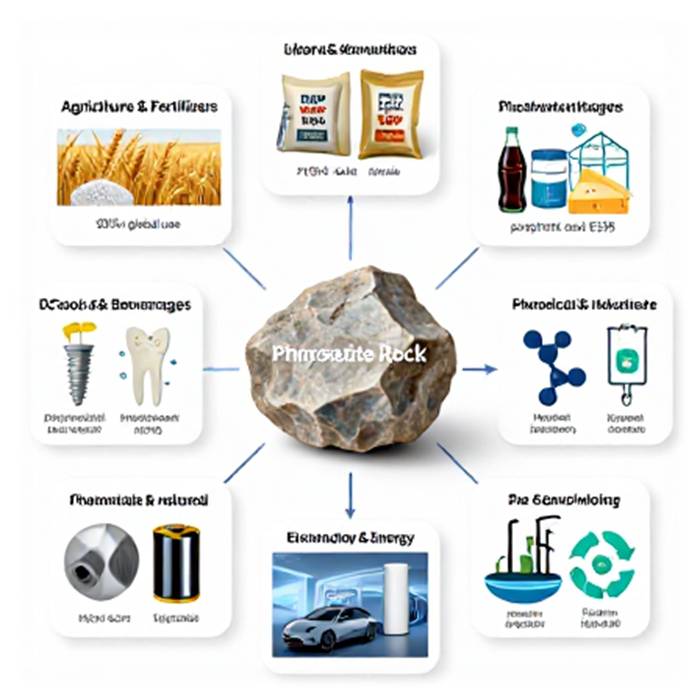
1. Agriculture and Fertilizer Production (Over 90% of Global Consumption)
Phosphate is the cornerstone of soil phosphorus supply, an essential nutrient with no substitute for root development and energy transfer in plants.
- A) Chemical Fertilizers (Water-Soluble): Essential for modern agriculture, greenhouse operations, and industrial cultivation.
- TSP (Triple Superphosphate): Containing approximately 46% P2O5.
- DAP (Diammonium Phosphate): Containing approximately 46% P2O5 balanced with Nitrogen.
- MAP (Monoammonium Phosphate): Containing 48% to 52% P2O5 (Ideal for alkaline soils).
- NPK: Balanced compound fertilizers for comprehensive crop nutrition.
- B) Direct Application:
In acidic soils (pH < 5.5), phosphate rock gradually dissolves, releasing phosphorus over time. This method is highly economical and sustainable in tropical regions (e.g., Africa and Brazil).
- Note: This practice is endorsed by organic agricultural organizations, such as IFOAM.
2. Food and Beverage Industry
Food-grade refined phosphates serve as critical additives, strictly adhering to Codex Alimentarius standards:
- Acidity Regulators: Phosphoric acid (E338) used in carbonated beverages.
- Anti-caking Agents: Utilized in products such as powdered milk, cheese, and spices.
- Texturizers: Stabilizing agents in processed meats (sausages, cold cuts) and sauces.
- Dietary Supplements: A primary phosphorus source in sports nutrition and specialized dietary foods.
3. Pharmaceutical and Healthcare Industries
- Mineral Supplements: Formulated for bone and dental health.
- Antacids: Aluminum and calcium phosphates used in gastrointestinal treatments.
- Advanced Biomaterials: Hydroxyapatite used in dental implants and orthopedic surgeries.
- Clinical Applications: Preparation of aqueous and electrolyte solutions.
4. Chemical and Industrial Sectors
- Phosphoric Acid (H3PO4H_3PO_4H3PO4): The foundational material for manufacturing anti-rust agents and industrial electrolytes.
- Phosphating: The creation of corrosion-resistant protective layers on metal sheets for automotive and home appliance manufacturing.
- Fire Retardants: Essential components in fire suppression systems and extinguisher compounds.
5. Technology and Energy (Next-Generation Batteries)
The energy sector represents one of the most strategic future markets:
- LFP Batteries (Lithium Iron Phosphate): Utilized by industry leaders like Tesla and BYD, these batteries offer superior safety, extended lifespan, and cost-efficiency. Their performance is heavily reliant on high-quality phosphate feedstock.
6. Environmental and Circular Economy
- Wastewater Treatment: Utilization of phosphate salts for the precipitation and removal of contaminants.
- Recycling: Cutting-edge technologies to recover phosphorus from sewage sludge, establishing it as a sustainable, alternative resource.
Global Distribution of Phosphate Consumption
|
Percentage |
Sector |
|
Over 90% |
Agriculture and Fertilizers |
|
Approximately 4% |
Food Industry |
|
Approximately 1.5% |
Pharmaceuticals and Healthcare |
|
Approximately 4.5% |
Technology, Energy, and Other Uses |
The diverse range of applications establishes phosphate rock as a highly strategic commodity. Any disruption in its supply can simultaneously impact multiple industries. Consequently, phosphate rock procurement must be viewed as a strategic operation rather than a routine purchase.
Understanding Phosphate Rock Technical Specifications
A successful procurement strategy begins with a precise understanding of the product’s technical profile. Phosphate rock is not a homogenous commodity; its commercial value is dictated by a synergy of chemical composition, physical properties, impurity levels, and geological origin.
Key Technical Indicators in Phosphate Rock Procurement
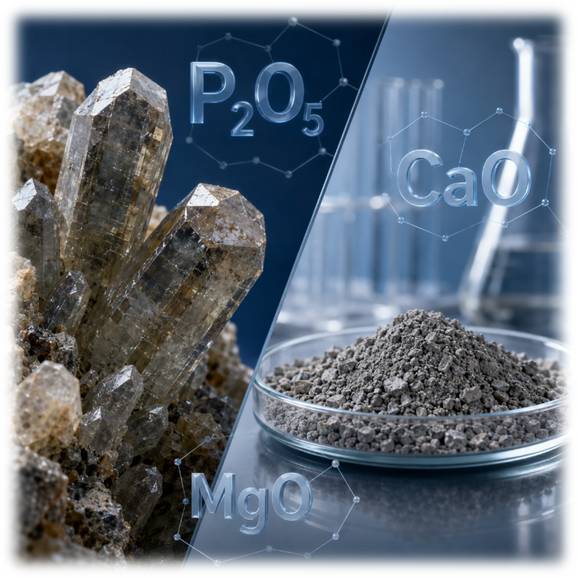
Buyers must meticulously evaluate the following specifications:
- P2O5 content: The primary indicator of phosphate grade.
- Moisture content
- Particle size distribution
- Calcium to Phosphorus (Ca:P) ratio
- Solubility behavior
- Insoluble matter
- Impurities, including:
- Cadmium
- Arsenic
- Lead
- Mercury
- Fluorine
- Chlorides
These parameters directly impact:
- Processing efficiency
- Product yield
- Final product quality
- Compliance with environmental regulations
- Actual cost of usage
For instance, phosphate rock intended for phosphoric acid production may require a different impurity profile than rock needed for agricultural fertilizers. Therefore, strategic procurement must begin with a precise definition of technical specifications aligned with the end-use application.
Why Price Should Not Be the Sole Criterion for Phosphate Rock Procurement
One of the most common pitfalls in the international phosphate market is focusing excessively on the quoted price while overlooking the importance of quality consistency and contractual transparency.
A cheaper shipment may appear attractive at first glance; however, if it suffers from the following, the actual cost will be significantly higher:
- Excessive moisture
- Grade levels below the agreed-upon standards
- Unacceptable impurity levels
- Inconsistent or inappropriate particle size
Hidden Costs of Substandard Quality
Substandard or off-specification phosphate rock can lead to:
- Reduced processing efficiency
- Rejected shipments
- Quality claims and disputes
- Production delays
- Increased operational costs
- Damage to business reputation
For this reason, professional buyers typically require:
- Detailed Technical Data Sheets (TDS)
- Representative samples
- Laboratory analysis
- Independent inspection
In practice, strategic procurement of phosphate rock means optimizing total value, not merely chasing the lowest nominal price.
How to Evaluate Phosphate Rock Suppliers?
Identifying and evaluating suppliers is one of the most critical stages in phosphate rock procurement. The global phosphate industry is concentrated in a limited number of producing countries, each with distinct characteristics in terms of reserve quality, mining structure, export policies, and logistical capabilities.
Key Producing Countries in the International Phosphate Rock Market
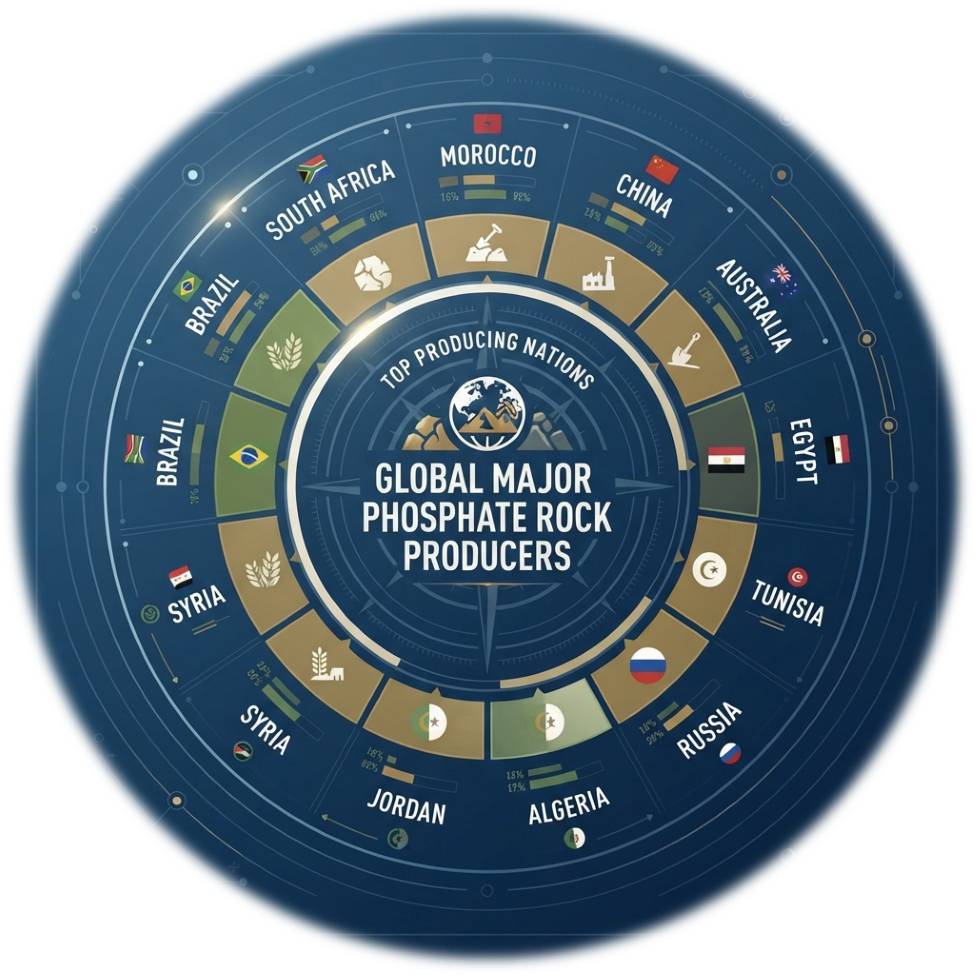
Key players in this market include:
- Morocco
- China
- Australia
- Egypt
- Tunisia
- Russia
- Algeria
- Jordan
- Syria
- Brazil
- South Africa
However, identifying a supplier is only the beginning. A buyer must verify whether the supplier has the capacity to consistently deliver on the following:
- Required volume
- Agreed-upon quality
- Precise documentation
- Reliable logistics performance
- Long-term operational stability
Key Criteria for Supplier Evaluation
Professional supplier assessment should encompass the following:
- Production capacity
- Mine ownership or direct access to reserves
- Processing and beneficiation capabilities
- Loading infrastructure
- Export track record
- Financial credibility
- Responsiveness and accuracy in communication
- Accuracy of documentation
- Performance on past contracts
It is also essential to categorize the counterparty:
- Direct Producer
- Authorized Marketer
- Quota-holding Trader
- Intermediary (without real control over supply)
This distinction is of significant importance in bulk mineral trading, as it directly impacts price transparency, delivery reliability, and legal accountability.
The Role of Market Intelligence in Phosphate Rock Procurement Strategy

A robust procurement strategy for phosphate rock would not be complete without comprehensive market intelligence. This market is influenced by a myriad of factors, including:
- Agricultural demand cycles
- Fertilizer price volatility
- Maritime shipping market conditions
- Energy costs
- Environmental regulations
- Export restrictions
- Geopolitical developments
- Port congestion
- Sanctions and maritime disruptions
Given the global concentration of phosphate reserves, any major disruption in a single region can rapidly impact global prices and the accessibility of shipments.
What Should Buyers Monitor?
To make informed decisions, buyers must continuously track:
- Price indices
- Freight rates
- Production announcements
- Tenders
- Weather conditions
- Changes in export policies
- Demand in destination markets
Companies that invest in market monitoring are better positioned to:
- Hedge against price volatility
- Identify optimal purchasing windows
- Negotiate from a position of strength
- Enhance supply security
In many cases, this intelligence assists the buyer in determining whether to stagger purchases over multiple timeframes or enter into medium-to-long-term contracts.
Choosing the Right Incoterms
Selecting the appropriate delivery basis is of paramount importance. Depending on the nature of the transaction, buyers may utilize one of the following terms:
- FOB (Free On Board)
- CFR (Cost and Freight)
- CIF (Cost, Insurance, and Freight)
Each of these options carries distinct implications for:
- Freight control
- Insurance responsibility
- Point of risk transfer
- Total cost transparency
Professional buyers typically select Incoterms based on vessel access, port conditions, logistical capabilities, and market timing.
Spot Purchase or Long-Term Contract?
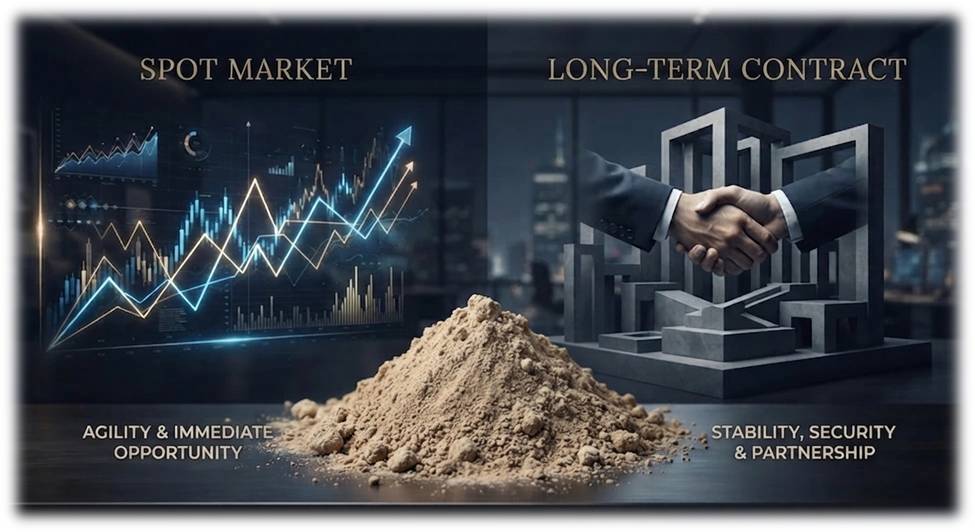
Another critical decision in phosphate rock procurement is choosing between spot purchases and long-term supply contracts.
Advantages of Spot Purchasing:
- High operational flexibility
- Opportunity to capitalize on temporary price dips
- Rapid response to short-term market volatility
Advantages of Long-Term Contracts:
- Greater security of supply volume
- Enhanced production planning
- Stronger supplier relationships
- More predictable pricing frameworks
- Reduced exposure to spot market volatility
In freight-sensitive markets characterized by cyclical fluctuations, long-term partnerships often yield strategic advantages that cannot be achieved through ad-hoc purchasing alone.
Bulk Shipping Logistics in the Phosphate Rock Trade
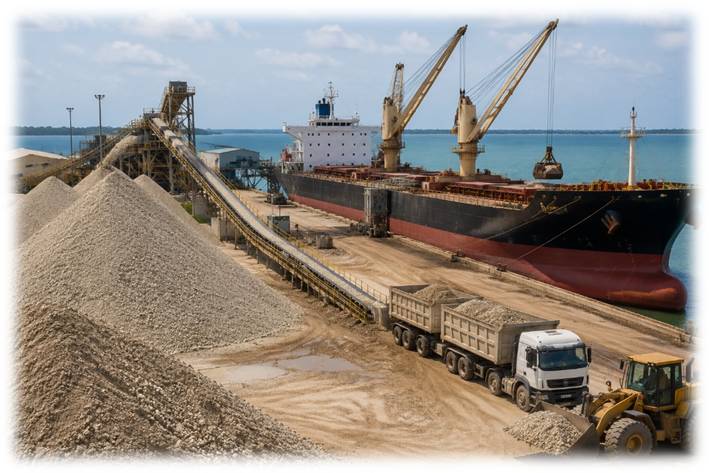
Since phosphate rock is typically transported in bulk, logistics planning is one of the primary drivers of commercial success. Every stage of the supply chain can affect cost, timing, and cargo quality.
Key Logistics Factors
Buyers should evaluate the following:
- Mine-to-port transportation
- Stockpile management
- Port congestion
- Vessel nomination
- Loading sequence
- Weather-related delays
- Customs procedures
- Discharge efficiency
- Inland transportation after discharge
Poor logistics planning can result in:
- Increased demurrage costs
- Higher port storage expenses
- Deterioration in cargo quality
- Disruption to production schedules
For this reason, procurement and logistics must be fully integrated in any serious phosphate rock sourcing strategy.
Quality Control and Pre-Shipment Inspection
Quality control is one of the most sensitive aspects of phosphate rock procurement. Since cargo quality directly affects the production process and customer satisfaction, buyers must establish verification systems that go beyond the seller’s declaration.
Best Practices for Ensuring Phosphate Rock Quality
Effective quality control should include:
- Independent pre-shipment inspection
- Representative sampling
- Testing in a reputable laboratory
- Contractually accepted testing methods
- Retention of sealed samples
- Clear acceptance criteria
- An umpire analysis process
Key Indicators to Verify
Before shipment or discharge, buyers should confirm the following:
- P2O5 content
- Moisture content
- Particle size
- Impurity profile
- Minor and trace elements
A robust inspection process reduces disputes, improves transparency, and protects the buyer against losses resulting from substandard quality.
Risk Management in International Phosphate Rock Procurement
Risk management lies at the core of every successful procurement framework. In international phosphate rock trade, the most significant risks include:
- Political instability
- Regulatory changes
- Export restrictions
- Sanctions
- Currency fluctuations
- War risk
- Maritime incidents
- Port strikes
- Severe weather disruptions
- Sudden changes in fertilizer demand
How Can Supply Risk Be Reduced?
A resilient strategy typically includes:
- Diversification of sourcing origins
- Cooperation with multiple qualified suppliers
- Protective contractual structures
- Financial discipline
- Strong logistics planning
- Close coordination between procurement, finance, and legal teams
Diversification is particularly important. Heavy dependence on a single supplier can quickly become a serious strategic vulnerability in the event of disruption.
Financial Risk in Phosphate Rock Imports
Financial risk is just as important as physical risk. Common payment methods in phosphate rock imports typically include:
- Letters of Credit
- Documentary Collections
- Advance Payment
- Deferred Settlement
Each of these methods affects:
- Liquidity
- Transaction security
- Banking costs
- Counterparty risk exposure
Large transactions may also be affected by:
- Exchange rate volatility
- Freight rate fluctuations
- Changes in financing costs
For this reason, close cooperation between procurement, finance, and legal departments is essential.
Sustainability and Compliance in Phosphate Rock Sourcing
Sustainability has become a critical part of phosphate rock procurement strategy. Buyers serving regulatory-sensitive markets or brand-conscious industries must pay close attention to:
- Mining practices
- Waste management
- Water consumption
- Carbon intensity
- Heavy metal content
- Environmental compliance
- Responsible sourcing requirements
Heavy metals such as cadmium, in particular, are subject to strict oversight in certain fertilizer markets. Buyers who overlook these factors may face regulatory barriers, customer concerns, and reputational damage.
Therefore, strategic sourcing today is no longer limited to price and availability alone; it also includes traceability, regulatory compliance, and environmental performance.
Why Strategic Partnerships Transcend Simple Transactions
In today’s market, professional buyers seek supply partners, not merely vendors. The most successful business relationships are those where the supplier or trading partner offers comprehensive support beyond product access, delivering:
- Guaranteed product availability
- Actionable market intelligence
- Integrated logistics support
- Streamlined inspection coordination
- Flawless and precise documentation
- Rapid, responsive problem resolution
In bulk commodity trading, execution quality is often just as critical as pricing. A professional, well-supported supply chain can generate far greater value than a cheap but poorly executed transaction.
The Future of Strategic Sourcing in the Phosphate Rock Market
The future of the international phosphate rock market will be shaped by several long-term macro trends, including:
- Global population growth
- Rising global food demand
- The restructuring of the fertilizer market
- Stricter global environmental regulations
- Maritime transport and freight volatility
- Shifting dynamics in global trade geography
Companies that manage procurement as a strategic discipline will be far better prepared to adapt to these shifts. This adaptation requires targeted investment in:
- Supplier intelligence and verification
- Continuous market monitoring
- Advanced contract management
- Integrated logistics coordination
- Rigorous quality assurance systems
- Long-term risk resilience
Conclusion
Strategic sourcing of phosphate rock in the international market demands a structured, informed, and long-term approach. The inherent complexity of the market, the technical sensitivity of the product, and the operational risks associated with cross-border bulk trading make professional procurement an absolute necessity for any enterprise dependent on a stable supply of phosphorus. From the precise definition of quality specifications and supplier credibility assessment to logistics management, contract structuring, quality control, and risk mitigation—every step of the procurement process directly dictates ultimate commercial success. Organizations that manage phosphate rock procurement with discipline, market intelligence, and a partnership-driven mindset are far better positioned to secure their supply chains, optimize total cost of ownership, and create sustainable value in an increasingly competitive global market.